Recycled Polyester Staple Fiber (RPSF) is becoming an increasingly important material in the textile and nonwoven industries. Typically produced from recycled PET bottles or other polyester waste, it gives discarded materials a new purpose by converting them into usable textile fibers. Through processes such as sorting, cleaning, melting, spinning, and cutting, recycled polyester can be transformed into staple fibers suitable for various manufacturing applications.
Beyond its environmental advantages, Recycled Polyester Staple Fiber offers practical material properties, flexible specifications, and broad application potential. Understanding these benefits helps explain why it is gaining attention across different industrial sectors.
One of the main benefits of Recycled Polyester Staple Fiber is its ability to reduce reliance on virgin polyester raw materials. Conventional polyester production depends largely on petroleum-based resources, while recycled polyester makes use of existing PET materials that have already entered the product lifecycle.
Recycling plastic bottles and polyester waste helps extend the useful life of these materials instead of sending them directly to landfills or other disposal routes. This approach supports more efficient resource utilization and reduces the demand for newly extracted raw materials.
For textile manufacturers, incorporating recycled polyester into production can also help diversify raw material sources. As sustainability becomes a more important consideration in material selection, recycled fibers provide another option for developing products with a lower dependence on virgin resources.
Recycled Polyester Staple Fiber can contribute to reducing the environmental footprint of textile production. Compared with manufacturing polyester entirely from virgin raw materials, certain recycling processes require less energy and can generate fewer greenhouse gas emissions.
However, the actual environmental benefits depend on several factors, including the source of recycled materials, collection and transportation methods, processing technology, and energy consumption during manufacturing.
Another important advantage is its contribution to plastic waste management. PET bottles are widely used in packaging, and their durable properties mean they can remain in the environment for long periods if improperly discarded. Converting suitable PET waste into polyester staple fiber creates an additional recycling pathway and supports the principles of a circular economy.
By returning recovered materials to industrial production, recycled polyester helps connect waste recovery with new material manufacturing.
Environmental benefits alone are not enough to make a material suitable for industrial use. Its physical properties and processing performance must also meet the requirements of downstream manufacturing.
Recycled Polyester Staple Fiber retains many of the characteristics associated with conventional polyester, including good tensile strength, abrasion resistance, dimensional stability, and relatively low moisture absorption. These properties make it suitable for a variety of textile and nonwoven applications.
Its versatility can be seen in several areas:
Spinning and Textile Production: Recycled polyester staple fiber can be blended with cotton, viscose, or other fibers to produce yarns for clothing, home textiles, and upholstery fabrics.
Nonwoven Fabrics: It can be used in needle-punched and other nonwoven products for filtration, automotive interiors, insulation, and industrial materials.
Filling Materials: Depending on fiber fineness and processing characteristics, it can serve as filling for pillows, cushions, mattresses, and other household products.
Automotive and Industrial Applications: Its durability and dimensional stability make it useful in selected automotive interior components, protective materials, and industrial textile products.
Different applications require different fiber characteristics. Selecting appropriate specifications helps ensure that recycled polyester performs effectively during processing and in the finished product.
Another advantage of Recycled Polyester Staple Fiber is the flexibility of its technical specifications. Manufacturers can adjust fiber characteristics to suit different production requirements, making it adaptable to both conventional textile processing and specialized industrial applications.
Several parameters are particularly important when selecting recycled polyester staple fiber.
| Technical Parameter | Influence on Production |
| Fiber Denier | Determines fiber fineness and influences fabric texture, softness, and bulkiness |
| Cut Length | Affects fiber blending, carding, spinning, and other processing operations |
| Crimp | Influences fiber cohesion, elasticity, bulkiness, and processing performance |
| Tensile Strength | Helps determine resistance to breakage during manufacturing |
| Color | Affects the appearance and consistency of the final product |
For example, finer fibers may be preferred for applications requiring a softer texture, while coarser fibers can be suitable for certain filling and nonwoven products. Similarly, cut length should match the requirements of the intended spinning or nonwoven production process.
These adjustable characteristics allow Recycled Polyester Staple Fiber to serve different manufacturing needs rather than being limited to a single product category.
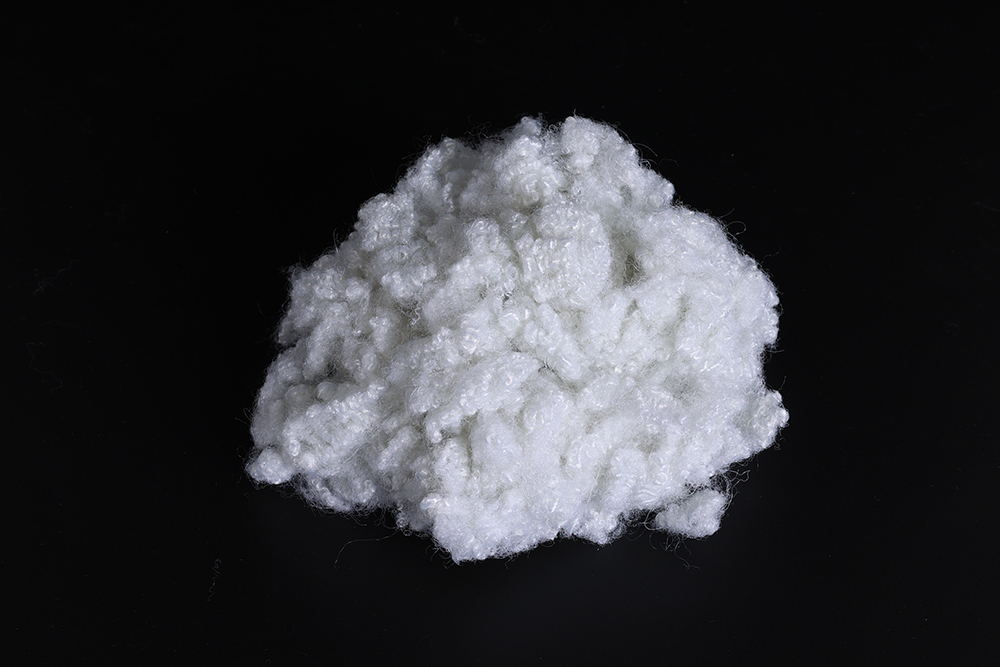
The use of recycled polyester also creates opportunities for manufacturers to develop products with recycled content. As sustainability requirements become more prominent across global supply chains, incorporating recycled materials can help companies respond to changing material preferences and environmental expectations.
In the home textile industry, recycled polyester staple fiber can be used in pillows, cushions, quilts, and mattress fillings. In the automotive sector, it can contribute to interior fabrics, sound-absorbing materials, and selected nonwoven components. It also provides opportunities for manufacturers of insulation products and industrial fabrics to incorporate recovered polyester into their material systems.
Importantly, recycled polyester does not necessarily require manufacturers to completely change their existing product designs. Depending on fiber specifications and production conditions, it can be blended with other materials or incorporated into established manufacturing processes.
This flexibility makes it a practical option for exploring more sustainable product development while maintaining the functional requirements of finished materials.
Although Recycled Polyester Staple Fiber offers several advantages, its quality and suitability depend on the characteristics of the recycled raw materials and the manufacturing process.
Raw material purity is particularly important because contaminants or inconsistent input materials may affect fiber quality. Manufacturers should also pay attention to tensile strength, fiber length, denier, crimp, and color consistency. These factors can influence processing efficiency, finished product appearance, and overall material performance.
The intended application should guide the selection process. For example, fiber used in spinning may require different specifications from fiber designed for needle-punched nonwoven fabrics or filling materials. Evaluating samples and conducting processing tests can help determine whether a particular fiber grade meets production requirements.
Recycled Polyester Staple Fiber combines resource recovery with the functional characteristics required by modern textile and industrial manufacturing. Its benefits extend beyond reducing dependence on virgin raw materials to include versatile applications, adjustable specifications, and opportunities for more sustainable product development.
As recycling technologies and material processing continue to improve, recycled polyester staple fiber is expected to play an increasingly important role in the development of circular textile supply chains. Choosing the right fiber specifications and maintaining consistent quality are essential to making the most of its environmental and industrial value.